
AAA expects 81.5 million Americans to travel at least 50 miles from home between Tuesday, November 24, and Monday, November 30, 2026, with about 72.9 million going by car. Big travel weeks bring a wave of travel scams: fake booking websites, hijacked vacation rental listings and “free trip” prizes that cost you money. Here’s how they work and how to book safely.
Last updated: November 25, 2026.
Why travel scams are getting harder to spot
AARP reports that fraud reports tied to travel, vacations and timeshares topped 64,000 in 2025, and that AI tools are helping criminals clone real travel websites so the fake versions look convincing. A copied site can have the same photos, layout and reviews as the real one, with only a small difference in the web address.
6 holiday travel scams to watch for
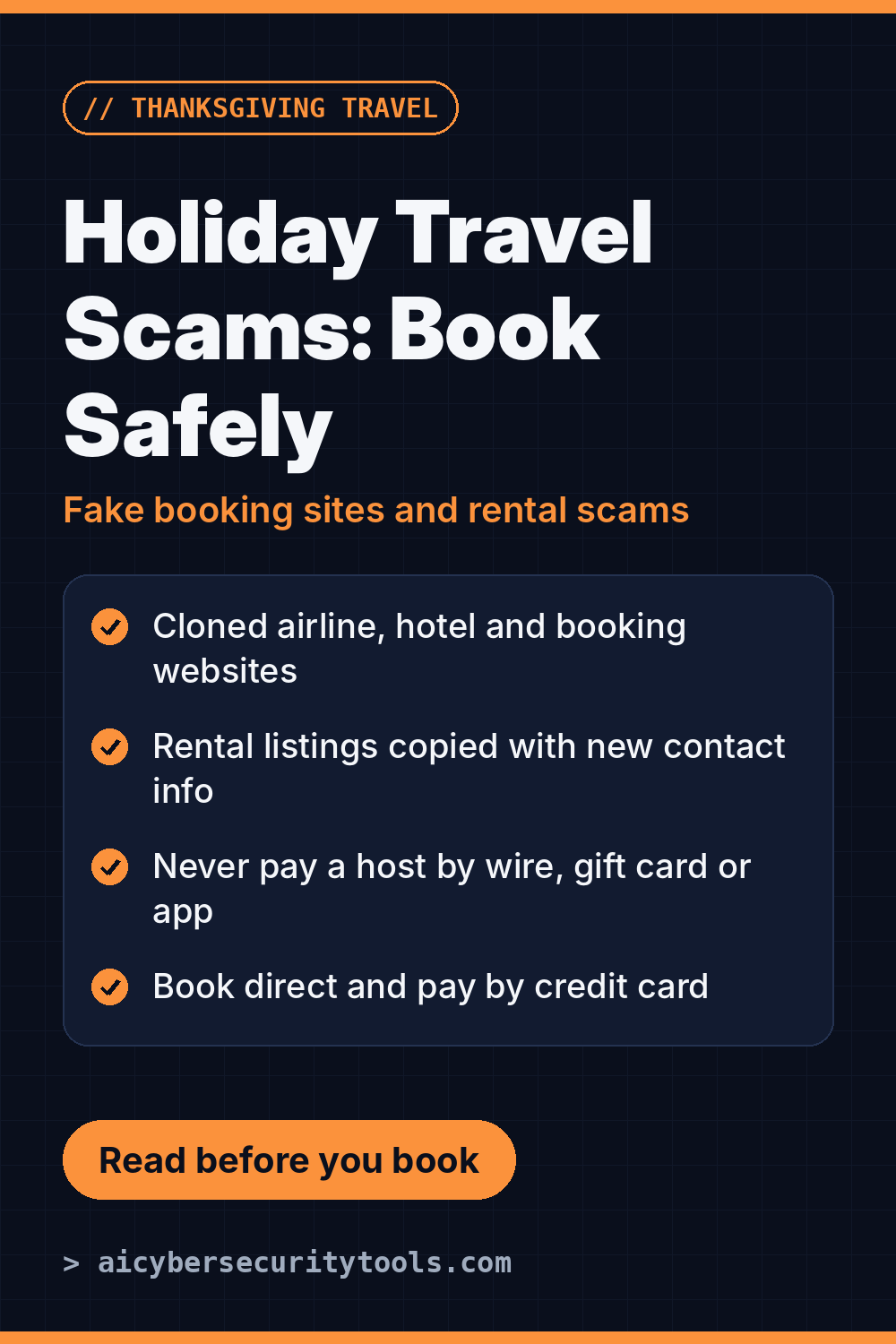
1. Fake booking websites
Scammers build near-copies of airline, hotel and booking sites, often found through search ads or social media. When you “book,” you’re handing your card details to criminals and nothing is actually reserved. Type the company’s address yourself, and use our checklist on how to spot a fake website before you pay.
2. Hijacked vacation rental listings
The FTC warns that scammers copy real rental listings, change the contact information and repost them on other sites. You pay the “owner,” then arrive to find the property was never available. Some cloned rental sites even open a fake “customer support” chat that asks for your card details to “fix” a booking problem.
3. “Pay outside the app” requests
Booking platforms like Airbnb and Vrbo have customer protections, but those usually disappear if a host talks you into paying them directly. If anyone asks you to pay by wire transfer, MoneyGram, Western Union, gift card or a payment app, treat it as a scam. See our guide to payment app scams.
4. “You’ve won a free vacation”
A call, text or email says you’ve won a trip, but you need to pay taxes, fees or a booking charge first. Real prizes are free. If you have to pay to collect it, it isn’t a prize.
5. Copycat passport and visa sites
Traveling abroad? The FTC says some sites copy the U.S. Department of State’s look and charge high fees for forms and services that are free or cheaper on the official site. Start from travel.state.gov.
6. Pressure to book right now
“Only one room left at this price” or “deal ends in 10 minutes” is designed to stop you checking. The FTC advises not to commit to a travel package or rental when someone pushes you to decide immediately.
How to book holiday travel safely
- Book directly with the airline, hotel or a well-known booking platform, using its app or a web address you typed yourself.
- Compare prices. If a rental or package is far below similar listings, be suspicious.
- Search the listing or company name with words like “scam” or “complaint,” and do a reverse image search on rental photos.
- Keep payment and messages inside the platform. Never move to email, text or WhatsApp to “finalize” a booking.
- Pay by credit card, which lets you dispute charges for things you never received.
- Use mobile data or a trusted network to book. Read our tips on whether public Wi-Fi is safe at airports and hotels.
If you think you’ve been scammed
- Call your card issuer or bank right away and ask to dispute the charge.
- If you booked through a platform, report the listing to the platform so it can act.
- Report it to the FTC at ReportFraud.ftc.gov and to your state attorney general.
- If you entered card or personal details on a fake site, follow our 7 steps to take after a data breach.
For more US reporting options, see where to report cybercrime and online scams in the United States. Shopping while you travel? Read our guide to Black Friday and Cyber Monday scams.
Frequently asked questions
How can I tell if a vacation rental listing is fake?
Warning signs include a price far below similar rentals, a host who wants to move the conversation or payment off the platform, requests for wire transfers or gift cards, and photos that also appear on other listings under a different name.
Is it safe to book through a link in an ad?
Ads can point to cloned booking sites. It’s safer to open the company’s app or type its web address yourself, then search for the deal there.
Where do I report a travel scam in the US?
Report it to the FTC at ReportFraud.ftc.gov and to your state attorney general. Also report the listing to the booking platform if you found it there.
Sources
- FTC: Common Travel Scams
- FTC: Stay scam-free no matter how far away you roam
- AARP: Keep an eye out for the latest travel scams
- Lodging Magazine: AAA 2026 Thanksgiving travel forecast
- Fox News: Fake vacation rental sites use live chat to steal data
By Swasti Dipak. This guide is general information, not legal or financial advice.