This is the first holiday season when millions of Americans can ask an AI assistant to find a deal and, in some cases, buy it for them. That’s convenient on Cyber Monday (November 30, 2026). It also gives scammers a new target: your AI shopping agent. A fake store doesn’t have to fool you anymore if it can fool the bot that shops for you. Here’s how the risk works, what major banks are warning about, and eight simple rules for using AI to shop safely.
Last updated: November 28, 2026.
What is an AI shopping assistant?
An AI shopping assistant (also called an AI shopping agent, or “agentic commerce”) is a chatbot or AI browser that helps you shop. It works on a sliding scale:
- Research only: it suggests gifts, compares prices and reads reviews, and you buy the item yourself. This is low risk.
- Buy with your approval: it fills in the cart and checkout, and you confirm before payment. This is medium risk.
- Buy on its own: it has your saved card and address and can complete a purchase without asking. This is the highest risk.
Adoption is growing fast. A QuickBooks survey of 6,000 US consumers found that 43% plan to use AI tools this holiday season, mostly to find a better price, and Salesforce predicts that 20% of holiday online shopping traffic in 2026 will come from AI agents. Not every store welcomes them: Semafor reports that Amazon and eBay block outside AI agents from their sites.
Why six major banks are warning about AI shopping
On September 22, 2026, Bank of America, Capital One, NatWest, ING, Commonwealth Bank of Australia and ASB Bank published a joint report, Building Trust in Agentic Commerce. The banks aren’t against AI shopping, but they flagged these risks:
- Hijacked or fake agents: criminals could compromise a shopping agent, or impersonate an agent or a merchant.
- Weaker protection: an agent could steer you to a payment method with weaker fraud protection than a credit card.
- Too much data: shopping agents build detailed records of your conversations, wishes and purchases, which become valuable targets for a breach.
- Unclear responsibility: when an agent makes a mistake, it may not be clear who pays.
Bank of America has also told customers not to share their banking usernames and passwords with third parties, including AI agents, and warned that customers may be responsible for transactions made by an agent they gave access to. That’s the single most important point in this guide: if you hand an AI your bank login, a fraud claim may be much harder to win.
How fake stores trick AI shopping agents
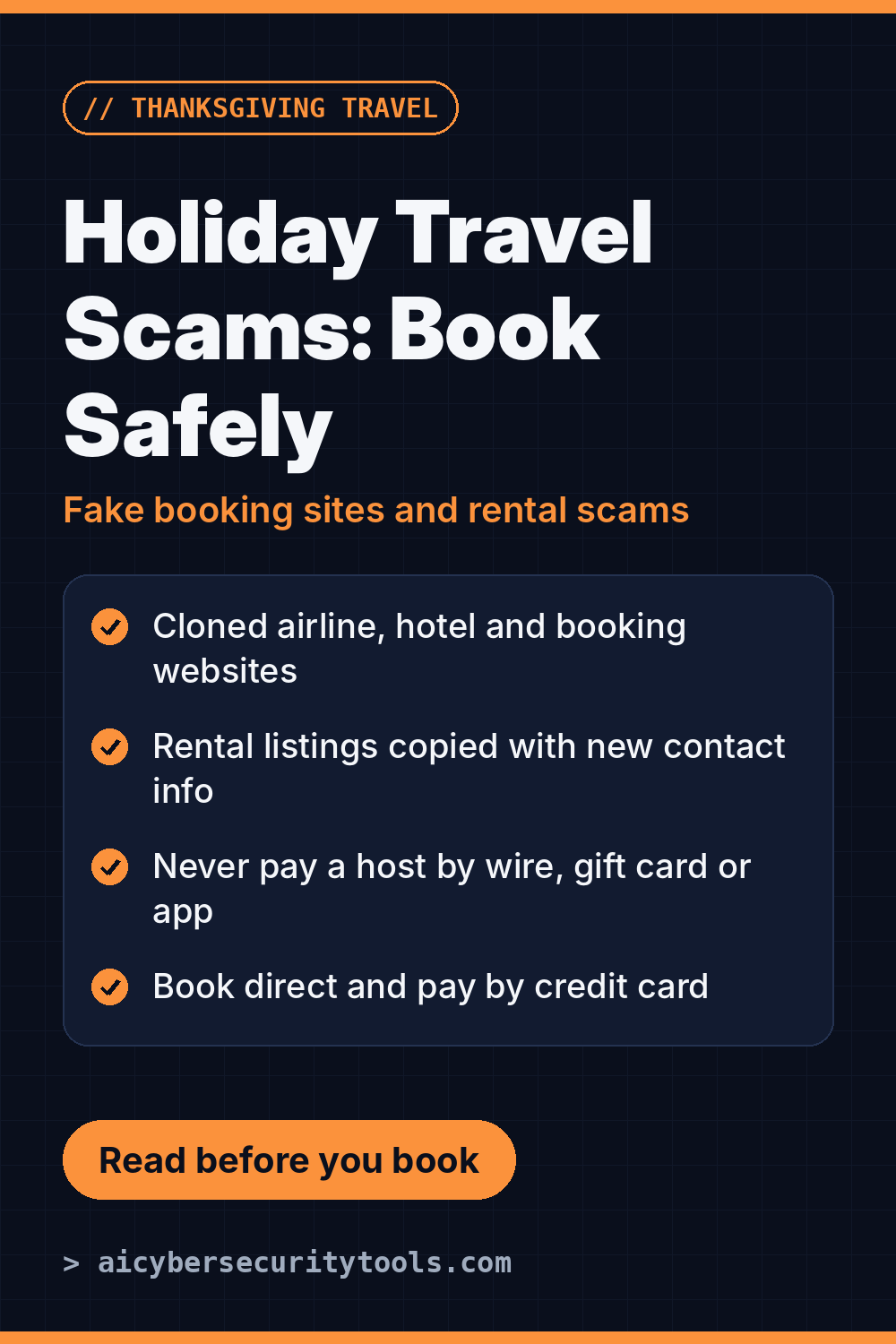
Fake shops are already everywhere this season. Scamwise’s 2026 Holiday Shopping Scam Report looked at more than 250,000 shopping sites that users submitted between March and October and rated more than 100,000 of them as definite or likely scams. Reports of fake holiday-themed stores rose fivefold in 60 days, and 74% of the fake stores used AI-generated content. (These numbers come from user reports, not a random sample, but the trend is clear.)
Here’s why that matters for AI shoppers:
1. Agents judge content, not reputation
A fake store can have a big catalog, size charts, a return policy and hundreds of reviews, all written by AI in minutes. An AI agent reading the page sees a complete, professional store. It usually doesn’t know that the domain was registered last week or that the “company” has no real address.
2. Agents can fill in your card automatically
In an August 2025 test by security firm Guardio, an AI browser was sent to a fake Walmart page and asked to buy an Apple Watch. In some runs it filled in the saved card and address and completed the purchase without asking for confirmation, ignoring signs the site was fake. In a separate test it fell for a fake Wells Fargo email and typed banking details into a fake login page. Results varied, and AI tools have improved since, but the lesson holds: an agent with saved payment details can hand them to the wrong seller.
3. Hidden instructions on web pages
Security researchers have shown that text hidden on a web page, invisible to you but readable by an AI, can try to give the agent new instructions. This is called prompt injection. A malicious page could tell an agent to ignore a warning, pick a different seller or skip a confirmation step. AI companies are adding defenses, but it isn’t a solved problem.
4. Fake “AI deal assistant” apps and extensions
Expect scammers to advertise their own “AI shopping assistant” or “AI coupon finder” browser extensions and apps. Some will be built to steal the card details and logins you give them. Use assistants only from companies you already trust, installed from official app stores.
5. The handoff to another store
Even legitimate assistants often send you to a third-party seller. For example, Amazon’s “Buy for Me” places orders on other retailers’ sites. You confirm the order, but that outside store handles delivery, returns and customer service. Before you approve, know exactly who you’re buying from.
8 rules for shopping safely with an AI assistant
- Let AI research, and do the checkout yourself. Use the assistant to find and compare products, then open the store and pay yourself. This one habit removes most of the risk.
- Always require approval. If your assistant can buy things, turn on the setting that makes it ask before every purchase, and read the final screen: store name, item, price, shipping and total.
- Never give an AI your bank or card login. Don’t share online banking usernames, passwords or one-time codes with any AI tool. Your bank may treat that as authorizing the agent.
- Use a credit card or a virtual card number. Credit cards give you the strongest dispute rights under federal law. Many banks also offer virtual card numbers that you can limit or shut off instantly, which is ideal for an AI assistant. Avoid debit cards, payment apps, gift cards, wires and crypto.
- Check any store you don’t know. A recommendation is not a background check. Look up the store’s domain age with our free WHOIS lookup tool: a “brand” whose website was created a few weeks ago is a major red flag. Then run through our 8 checks to spot a fake website.
- Search the store name plus “scam” or “complaint.” Real complaints show up fast for fake shops.
- Compare the total price somewhere you trust. If the AI found a deal far below every major retailer, assume it’s fake, and ignore countdown timers.
- Review and remove access afterwards. Delete saved cards the assistant doesn’t need, check its permission settings, and keep receipts and order confirmations until items arrive.
What to do if your AI assistant bought from a fake store
- Call your card issuer right away using the number on the back of your card. Dispute the charge and ask for a new card number.
- Remove the card from the AI tool and revoke its payment and account permissions.
- Change passwords for any account the assistant could reach, and turn on multi-factor authentication.
- Save evidence: the store’s web address, the AI chat or order history, receipts and emails.
- Report it to the FTC at ReportFraud.ftc.gov, the FBI at ic3.gov, and the AI company. Our guide on where to report scams in the US covers every option.
Frequently asked questions
Is it safe to use AI for Cyber Monday shopping?
Using AI to research gifts and compare prices is generally safe. The risk rises when you let an assistant pay on its own. Keep the final checkout in your hands, pay by credit card, and check any unfamiliar store yourself.
Can an AI shopping agent be scammed?
Yes. Fake stores built with AI can look complete and trustworthy to an agent, and security tests have shown AI browsers entering saved card details on a fake store. Hidden instructions on web pages can also try to manipulate agents.
Who is responsible if my AI agent makes a bad purchase?
It depends on how you paid and what access you gave. Credit card dispute rights still apply to charges from fake stores, but Bank of America has warned that customers may be responsible for transactions by an AI agent they gave their banking login to. Never share your bank credentials with an AI tool.
How do I check if a store an AI recommended is legit?
Check how old the website is with a WHOIS lookup, look for a real address and phone number, search the store name with “scam” or “reviews,” and compare the price with a retailer you know. New domains, missing contact details and impossible prices are the biggest warning signs.
More holiday safety: 9 Black Friday and Cyber Monday scams to watch, fake delivery texts and Giving Tuesday charity scams. Got a suspicious message? Paste it into our free Scam Message Checker.
Sources
- Fox Business / Reuters: banks warn AI shopping agents could increase scams and fraud (September 2026)
- Bitdefender: AI agents want to shop for you; banks warn of scams and privacy risks
- All About Cookies: Bank of America warns you may be liable for what your AI agent does
- All About Cookies: Scamwise 2026 holiday fake-store findings and AI shopping risks
- The Paypers: Black Friday 2026, when the shopper is an AI agent
- Semafor: ecommerce confronts AI shopping agents ahead of the holidays
- FTC Consumer Advice: online shopping
By Swasti Dipak. This guide is general information, not legal or financial advice.